


[Snowboard comparison] 9 boards tested to help you make the right choice

Founder of Stone Snowboards
![[Snowboard comparison] 9 boards tested to help you make the right choice](https://www.stonesnowboards.com/stupload/stblog/1/28/39/2839large.jpg)
Choosing a snowboard is like choosing a good playlist: it depends on your style, your mood, and what you want to get up to. This snowboard comparison reviews 9 models from Stone, tested, analysed and ranked by riding style. Whether you’re a pure freestyler, a dedicated freerider or a curious all-rounder, there’s a board for you here.
The aim? To give you a real helping hand in finding the board that matches your level, your desires, and your favourite playground. No unnecessary jargon, no waffle: just the facts. Shape, flex, camber, performance on snow… everything has been scrutinised to help you make an informed choice.
And if you want straight to the point, check out the summary table of the snowboard comparison at the bottom of the page.
Understanding this snowboard comparison: what sets each board apart
Before rushing headlong into a model, it’s best to understand the elements that make up this snowboard comparison. Why? Because two boards that look alike can behave very differently once on the snow. And conversely, some boards you’d never have considered might turn out to be real gems depending on your riding style. Here are the basics you need to know to read this guide like a pro.
The main riding categories: freestyle, all-mountain, freeride
Each board in this snowboard comparison is linked to one or more main disciplines. It’s not just a label: it reflects a real difference in construction and feel underfoot.
-
Freestyle: if you love jumping, turning, jibbing and riding switch, this is the place for you. These boards are often shorter, symmetrical (twin tip), with a softer flex to absorb impact and play with the snow.
-
Freeride: powder, couloirs, steep, challenging slopes: these boards are designed to carve, float and maintain grip even in tricky conditions.
-
All-mountain: for those who want to do it all on a single board. From the park to the piste, via a few off-piste runs or side hits, these boards aim for balance.
Some Stone boards (such as the Natural 7 or the Totem) are hybrids: they allow you to switch from one terrain to another with ease. That’s the whole point of this snowboard comparison: to show you what each board is capable of, beyond the labels.
Flex, camber, shape, base… what you need to know
It’s not enough to know whether a board is “freestyle” or “freeride”. Other technical criteria come into play, and they have a huge impact on how the board feels on the snow. Here are the ones featured in this snowboard comparison:
-
Flex: the more flexible it is, the more playful and forgiving the board is. The stiffer it is, the more precise and stable it will be at high speeds.
-
Camber: (almost) all the Stone boards in this snowboard comparison have classic camber, which provides pop, grip and precision on hard snow. No rocker here, just control. Only the Farther has hybrid camber + rocker.
-
Shape: twin (symmetrical) for freestyle and switch riding, directional for freeriding. Hybrids combine the two to some extent, like the Totem.
-
Base: sintered (IS 7200 or 6000) for fast, durable glide, or extruded for more affordable models.

Why choose a Stone board?
This snowboard comparison is 100% dedicated to Stone, and that’s no coincidence. All the boards tested share the same philosophy:
-
Performance: every board is designed to excel on its terrain. Technical materials, meticulous finishes, optimised shape.
-
Durability: FSC-certified poplar cores, strong biaxial fibres, bio-based resins. These are boards that last for several seasons.
-
Aesthetics: every design is created by an artist or a rider. It’s more than just a piece of sports equipment; it’s a board you love to ride… and look at.
With these pointers in mind, you’ll be able to approach the rest of the snowboard comparison with a keener eye. Ready to discover the freestyle boards? Click here.
Boards for hardcore freestyle
You spend more time in the air than on the snow
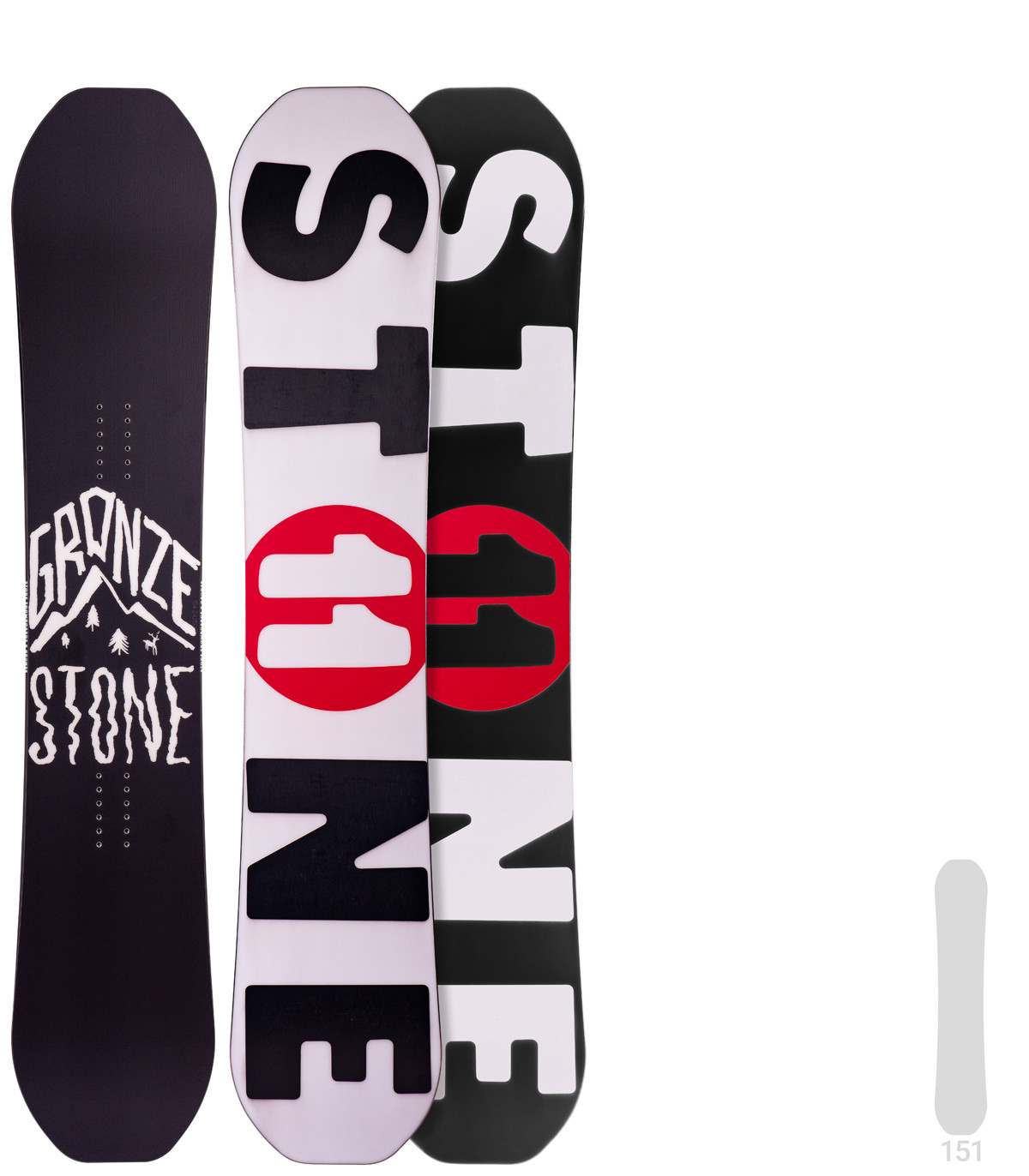
We’re kicking off this snowboard comparison with a board that has just one thing on its mind: freestyle. And if there’s one board that lives and breathes the park and jibbing, it’s the Gronze. Twin shape, classic camber, playful flex: it ticks all the boxes for creative riding.
Want to spend your day buttering, slashing the edges of the piste or attempting switch spins? That’s exactly what it’s built for. It pops effortlessly, takes the rough landings without giving you a hard time, and helps you progress without wrecking your legs.
It’s not the most stable at full speed, but it doesn’t care. What it loves is playing. And frankly, that’s what we ask of it. A fun, forgiving board, perfect for throwing down freestyle moves without overthinking it.
All-mountain boards with a freestyle focus
You ride everywhere but want a board that loves the park and riding switch
Well, if you want a board that can do it all, but with a real penchant for freestyle, you’ve come to the right section of this snowboard comparison. Here you’ll find boards that handle the piste just as well as jibbing on rails. These boards love to go switch, pivot, pop – in short, they’ve got that little bit of madness that lets you have fun anywhere.
The Gonzo
The Gonzo is a bit like the fun-loving friend of the group. Its flex is well-balanced, soft enough to forgive your mistakes, but with enough punch to send you flying over the features like a pro. You can really make progress with it; it encourages you to try new things without falling on your face too often (well, I hope).
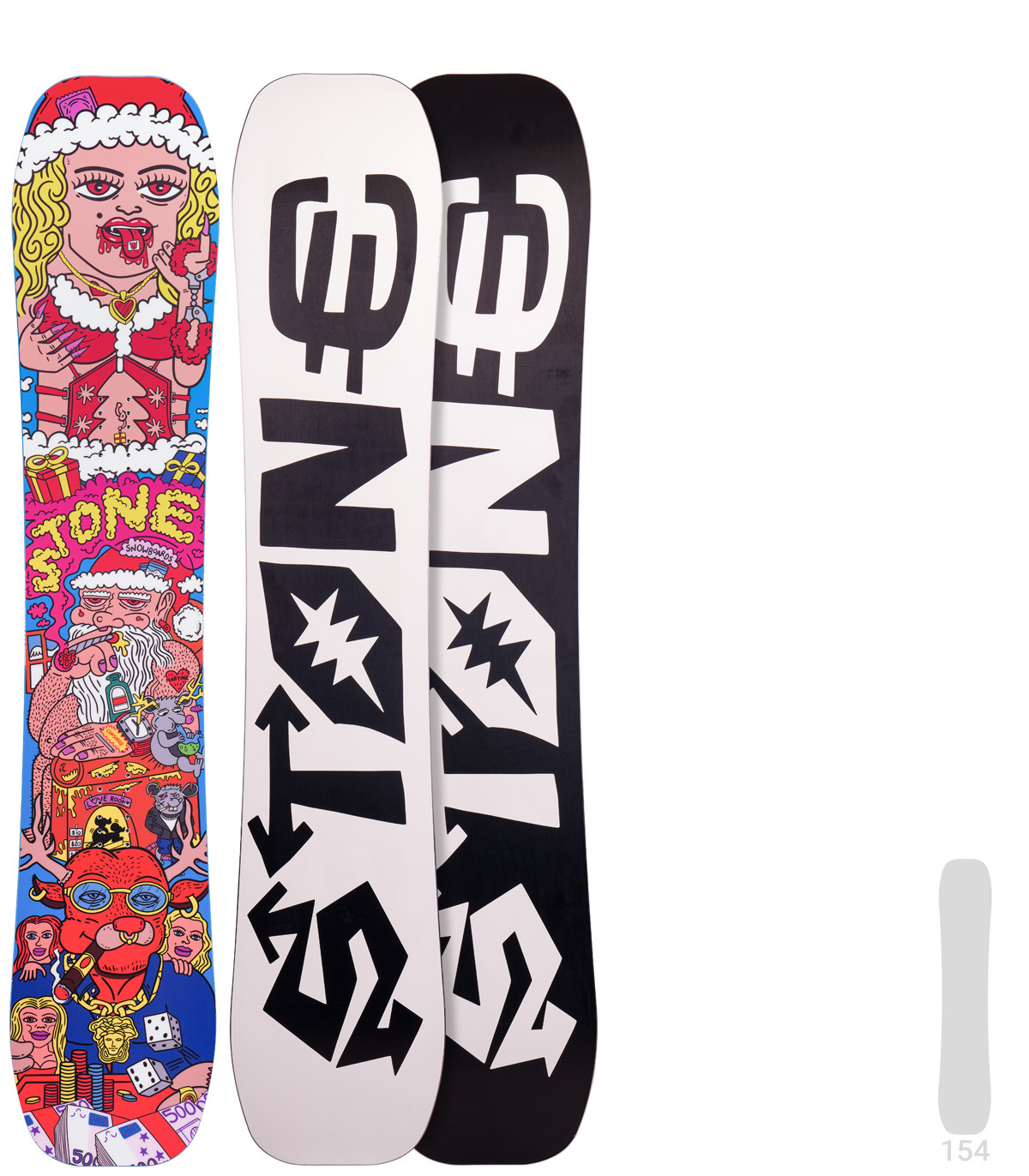
The Message
The Message is a slightly more accessible model, perfect for those starting out in freestyle but who don’t want to sacrifice responsiveness. It’s light, manoeuvrable and responsive, so you don’t need to be an Olympic athlete to have a blast with it. What’s more, it’s still comfortable for carving down the piste, making it a versatile companion.

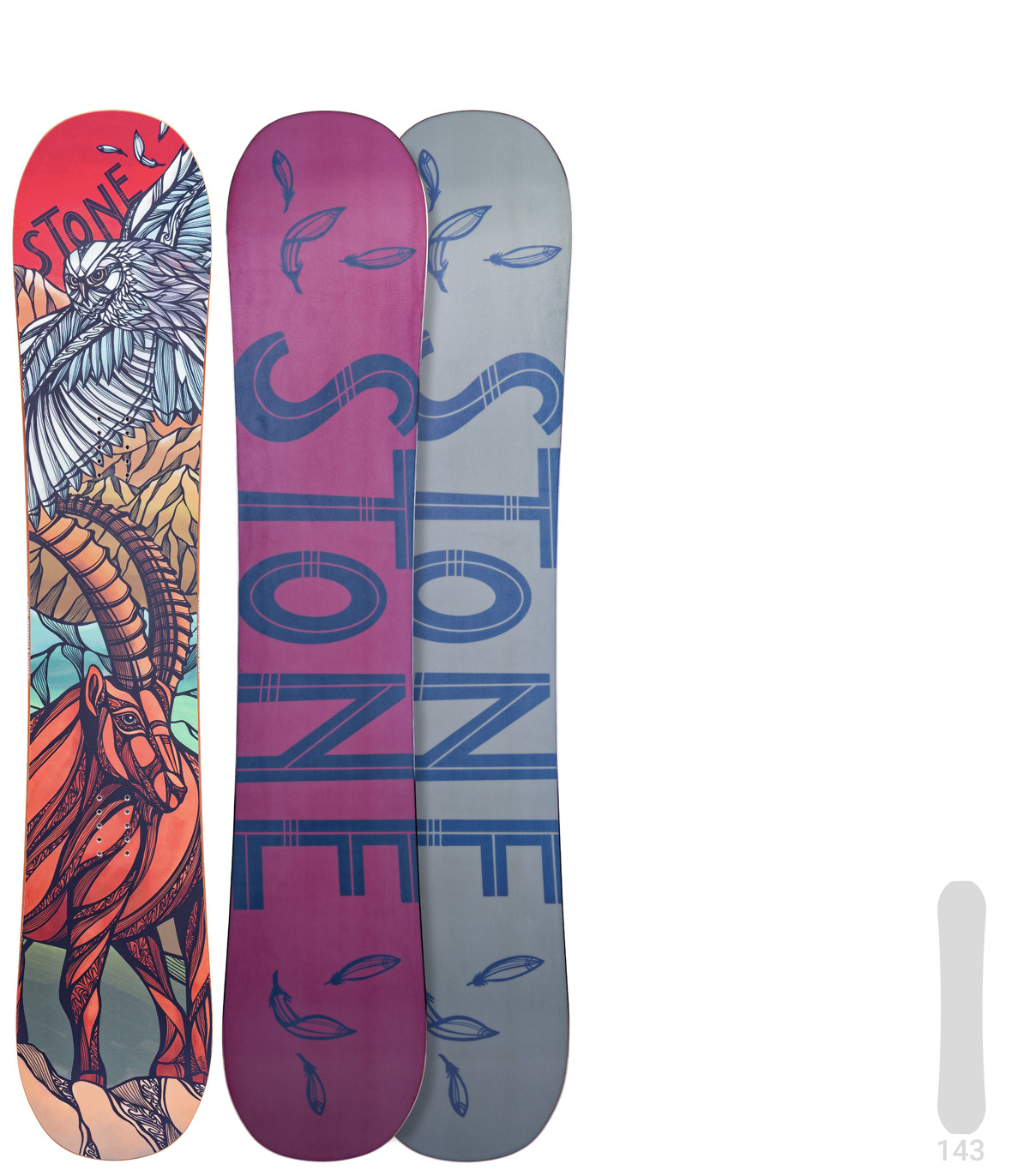
The Thunder
Finally, the Thunder is your best mate if you’re on the lighter side or if you want a super-manoeuvrable board. It loves tight turns and quick changes of direction, and won’t let you down when you want to pull off some tricky little tricks. The Thunder is the kind of board that does it all without ever complaining.
Pure freeride snowboards
Your thing is the line, the slope and the powder
If powder and challenging slopes make your eyes light up, this section of the snowboard comparison is for you. Here, we’re talking pure, hardcore freeride; the board you want under your feet needs to be solid, stable, grippy, and give you confidence when you dive into the slope.
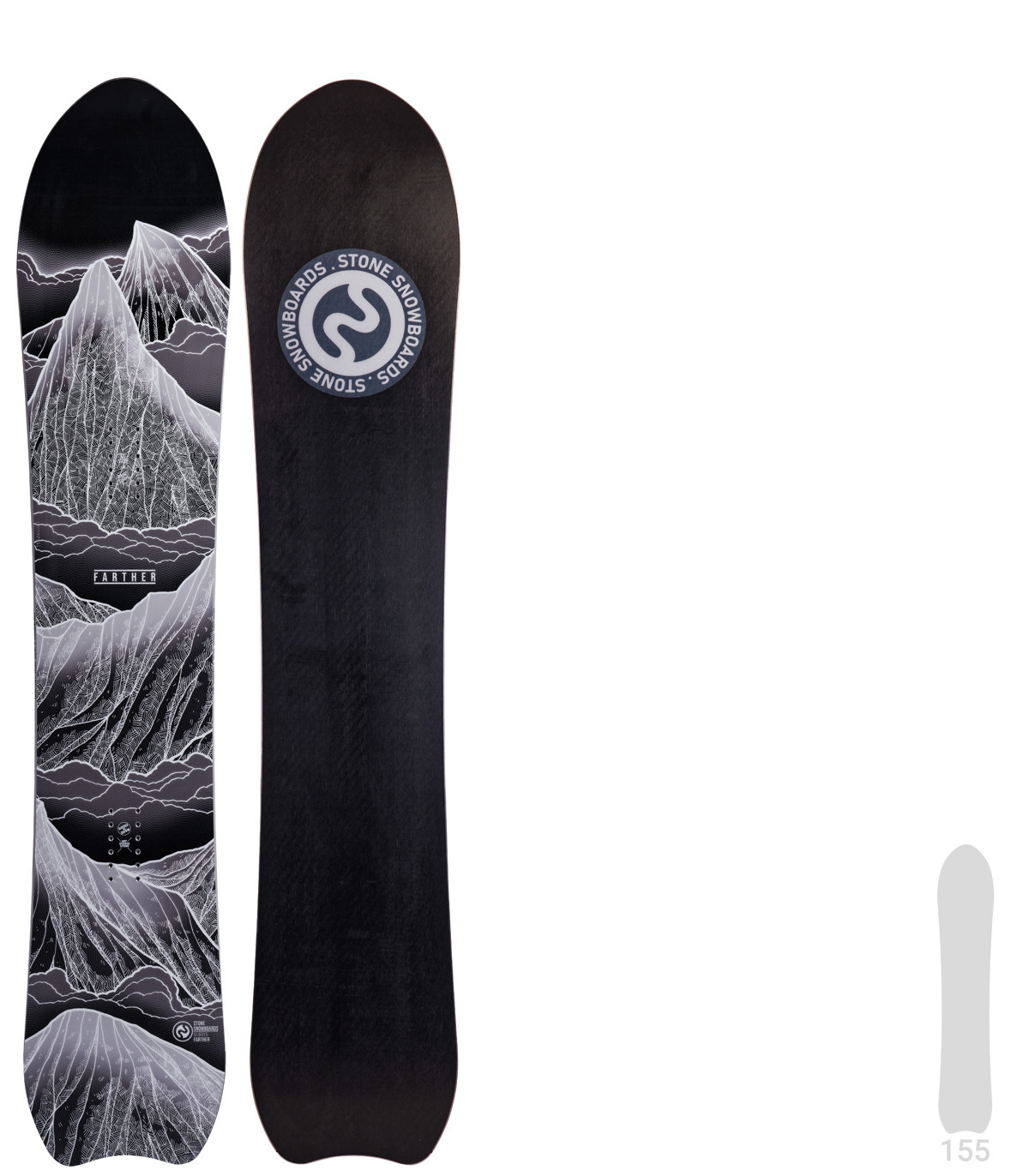
The Farther
The Farther is the queen of the wild mountain. Its directional shape with a pronounced set-back gives it that natural float that sticks to the slope like a second skin. You can push it into deep powder, it floats without flinching, and on hard snow, it stays grippy, always ready to hold the line.
The big advantage? It’s super stable, so you don’t need to be Travis Rice to master it. It stays comfortable, even when things get technical, making it perfect for freeride enthusiasts who love to explore, not just go all out.
Basically, the Farther is your best ally for enjoying the backcountry, long untracked lines, and runs where you’re alone in the world. No need to look elsewhere if that’s your thing.
All-mountain boards with a freeride focus
You want a board that does it all, but with a soft spot for steep slopes
If you’re more of a versatile rider, but can’t hide a slight penchant for challenging runs, welcome to this section of the snowboard comparison. These boards can do it all, but will prefer slightly more serious, technical terrain.
The Origin
The Origin embodies this philosophy. It’s a comfortable board on hard and mixed snow, capable of staying on track even when things get a bit slippery. Its moderate setback makes it more stable in a straight line, whilst remaining flexible enough to make precise, fast turns.
What’s more, it performs well in switch, which is a bonus if you fancy a bit of variety. It will never let you down, even when conditions get tough. In short, a true partner for anyone wanting a robust and precise board without compromising on manoeuvrability.
It’s the ideal board for those who don’t want to specialise but are looking for a reliable board, capable of adapting to any situation, with a slight emphasis on freeride. A real Swiss Army knife in this snowboard comparison.
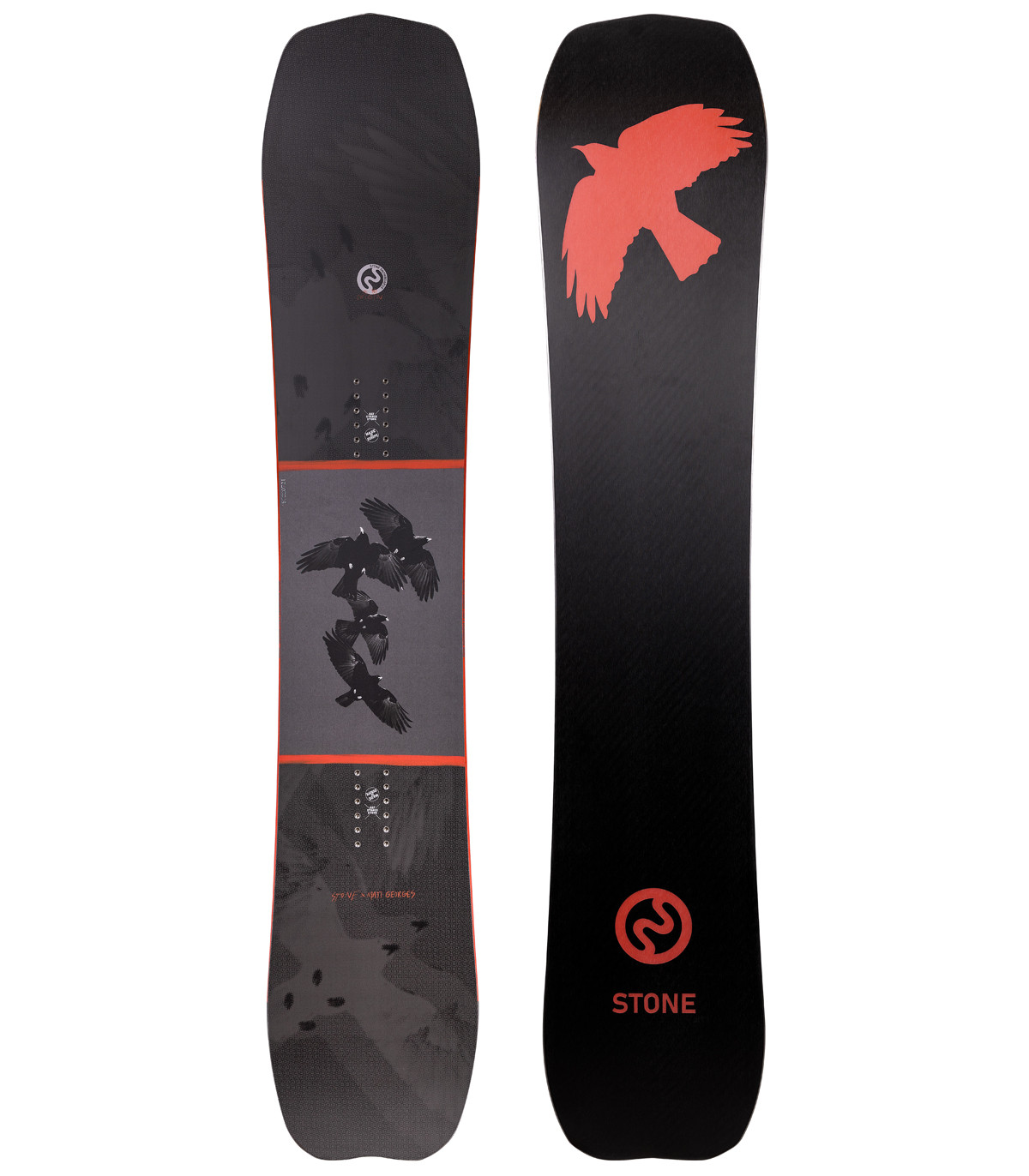
Ultra-versatile all-mountain models
For those who don’t want to choose: piste, powder, park – it does it all
Ahhh, ultra-versatile boards... The dream of many of us, especially when we don’t fancy lugging around five different boards. Here, you’ll find boards that can do it all, with a clever balance between manoeuvrability, stability and versatility.
The Natural 7
The Natural 7 is a good example. It offers a smooth, balanced ride, capable of switching from groomed piste to fresh powder without batting an eyelid. Its medium flex gives it enough pop to have fun on small bumps or kickers, yet it remains reassuring when the slope gets steeper.
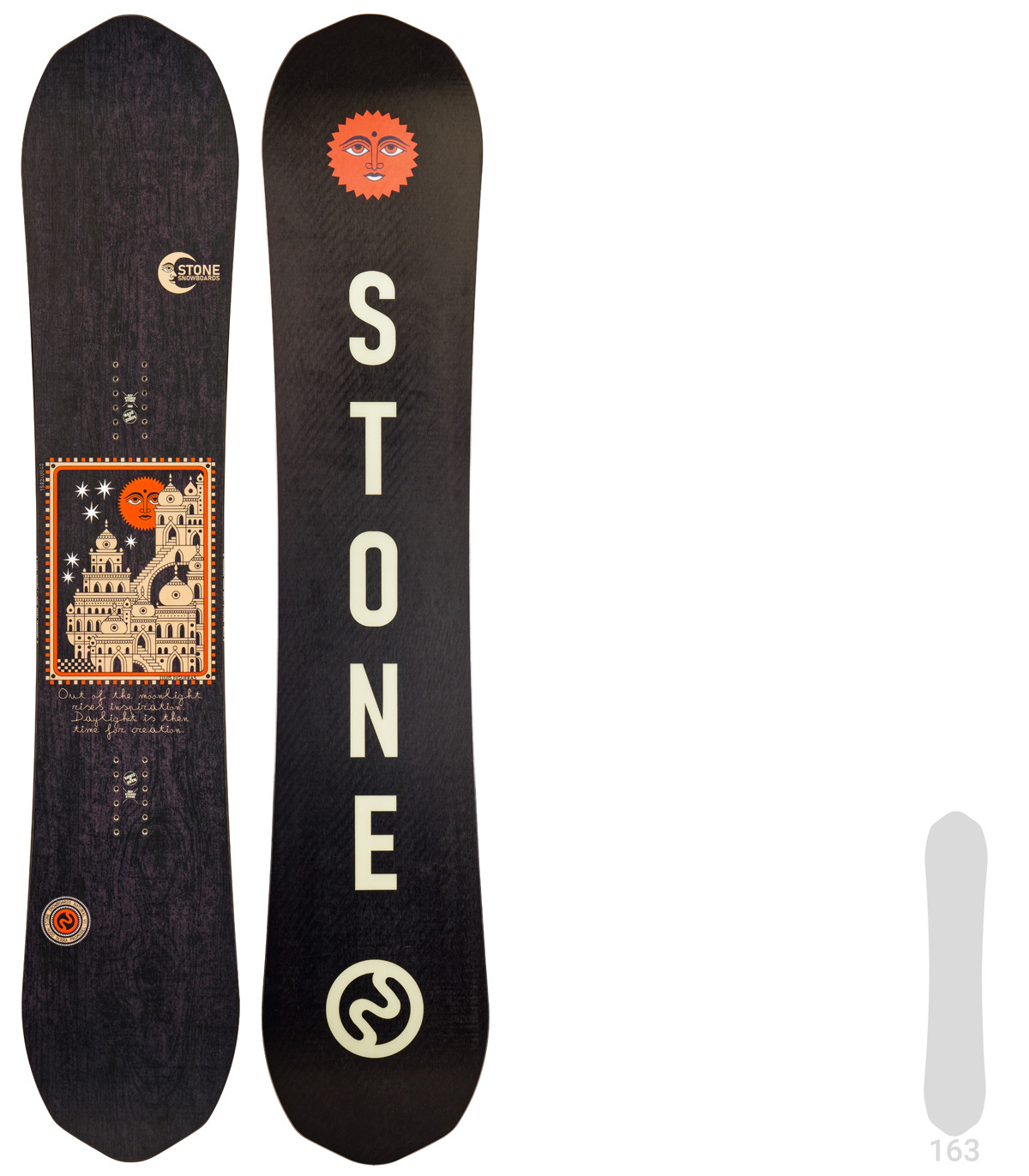
This board is designed to let you explore the mountain in its entirety, without stressing over which gear to choose. If you’re looking for an all-rounder in this snowboard comparison, this model is well worth a look.
Snowboard comparison: summary table
|
Model |
Riding style |
Shape |
Flex |
Recommended level |
What sets it apart |
|
David Vincent |
All-mountain, Freestyle |
Twin tip |
7 |
Intermediate to expert |
Ultra-precise, big pop, perfect for riding in any direction |
|
Gronze |
Freestyle |
Twin tip |
6 |
Beginner to advanced |
Forgiving, fun, perfect for improving in the park and on flat ground |
|
Gonzo |
All-mountain, Freestyle |
Twin tip |
7 |
Beginner to advanced |
Pop and stability, perfect for playing all over the mountain |
|
Message |
Freestyle, All-mountain |
Twin tip |
7 |
Beginner to advanced |
Accessible, playful, a good stepping stone to more challenging riding |
|
Natural 7 |
Freeride, All-mountain |
Twin tip |
8 |
Beginner to advanced |
Highly versatile, super stable and responsive in all conditions |
|
Origin |
Freeride, All-mountain |
Twin tip |
7 |
Beginner to advanced |
Smooth and stable, perfect for riding hard without compromising on comfort |
|
Farther |
Freeride |
Directional - Hybrid camber + rocker |
8 |
Intermediate to expert |
Grip, float, aggressive carving: built for pure freeriding |
|
Totem |
All-mountain, Freeride, Freestyle |
Twin tip |
6 |
Beginner to advanced |
Versatile, fun, perfect for progressing with confidence |
|
Thunder |
Freestyle, All-mountain |
Twin tip |
6 |
Beginner to advanced |
Very manoeuvrable, ideal for smaller riders or playful riding |
In conclusion
Ultimately, this snowboard comparison clearly shows one thing: at Stone, every board has its own personality. Some are designed to show off your style in the park, others to carve through powder, and others still to do a bit of everything with confidence.
The idea isn’t to tell you “which one’s the best”, but which one’s right for you. If you want to improve your freestyle skills without getting too scared, the Gronze or the Message are top choices. If you want a board that takes you everywhere, the Natural 7 or the Totem are there for that. And if you love it when it leans hard in the powder, the Farther is waiting for you.
Trust your instincts, think about what you enjoy riding, and choose accordingly. Because a good board is one that makes you want to go back out and ride, again and again.
See you soon, Stoners!